We may earn a commission when you buy through our links. Learn more
The question has a short answer: watts of panel = watt-hours you use per day / peak sun hours, then a margin for losses. The long answer is that peak sun hours on a flat roof change by a factor of two to more than six between December and June in the states we read (Florida 2.2, Washington 6.4 (NLR data)), so "how much" depends on when and where you camp.
Step 1: how many watt-hours do you use a day?
From the power budget. As a reference, the published fridge figures run from 165 Wh a day (EcoFlow, fridge use) to 1,440 Wh (BougeRV's 60 W nonstop example).
Step 2: how many peak sun hours do you get?
NLR's Solar Resource API gives the average daily solar energy on a flat surface, in kWh/m2/day, which equals peak sun hours. At the capital of each state we read, year average, December and June:
| State (capital) | Year average | December | June | 200 W panel, December | 200 W panel, June |
|---|---|---|---|---|---|
| Arizona (Phoenix) | 5.78 h | 3.18 h | 8.31 h | 636 Wh | 1,662 Wh |
| California (Sacramento) | 5.07 h | 1.84 h | 8.12 h | 368 Wh | 1,624 Wh |
| Colorado (Denver) | 4.83 h | 2.26 h | 7.21 h | 452 Wh | 1,442 Wh |
| Florida (Tallahassee) | 4.79 h | 2.8 h | 6.07 h | 560 Wh | 1,214 Wh |
| Nevada (Carson City) | 5.27 h | 2.11 h | 8.17 h | 422 Wh | 1,634 Wh |
| Oregon (Salem) | 3.77 h | 1.06 h | 6.13 h | 212 Wh | 1,226 Wh |
| Texas (Austin) | 4.74 h | 2.71 h | 6.63 h | 542 Wh | 1,326 Wh |
| Utah (Salt Lake City) | 4.71 h | 1.74 h | 7.49 h | 348 Wh | 1,498 Wh |
| Washington (Olympia) | 3.37 h | 0.88 h | 5.64 h | 176 Wh | 1,128 Wh |
Source: NLR (formerly NREL) Solar Resource Data API v1, avg_ghi. More states are added as the free API quota allows.
Step 3: how many panel watts do you need?
panel watts = daily Wh / peak sun hours / (1 - losses)
No maker in our list publishes one loss figure for a whole van system, so we leave the margin to you; the roof tool has a losses field. Then check that the panels fit: the tool tests the published size of each panel on your free roof area.
Which solar panels cost the least per watt?
| Panel | Watts | Size (published) | Area | Watts per sq ft | Price | Price per watt |
|---|---|---|---|---|---|---|
| Renogy 100W N-Type bifacial | 100 W | 34.1 x 22.8 in | 5.4 sq ft | 18.5 | $111.99 | $1.12 |
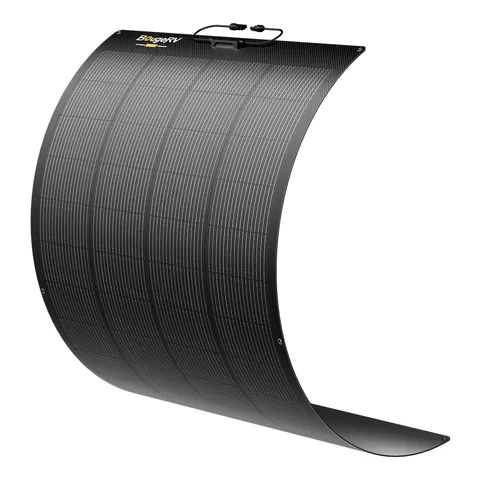 BougeRV Arch Pro 100W flexible | 100 W | 38.3 x 24.1 in | 6.4 sq ft | 15.6 | $149.99 | $1.50 |
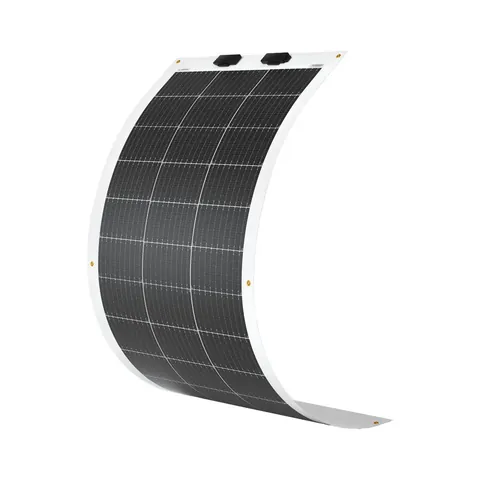 Renogy 100W lightweight flexible | 100 W | 43.0 x 22.9 in | 6.8 sq ft | 14.6 | $149.99 | $1.50 |
| Renogy Flex ShadowFlux 100W | 100 W | 37.09 x 24.13 in | 6.2 sq ft | 16.1 | $172.99 | $1.73 |
| BougeRV N-Type 200W 16BB bifacial (12V) | 200 W | 51.57 x 30.2 in | 10.8 sq ft | 18.5 | $188.99 | $0.94 |
| Renogy 200W N-Type bifacial | 200 W | 51.7 x 30.1 in | 10.8 sq ft | 18.5 | $199.99 | $1 |
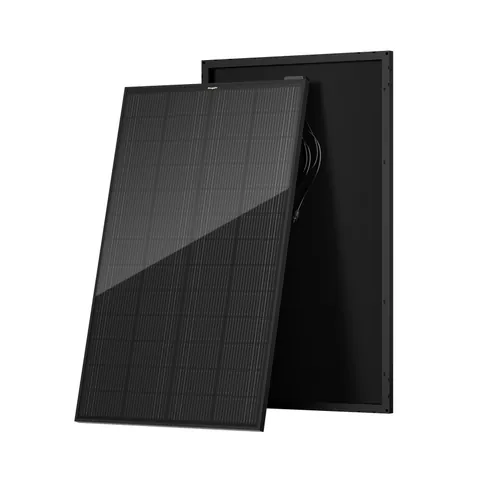 BougeRV ShadePower 200W N-Type rigid | 200 W | 50.2 x 30.3 in | 10.6 sq ft | 18.9 | $219.99 | $1.10 |
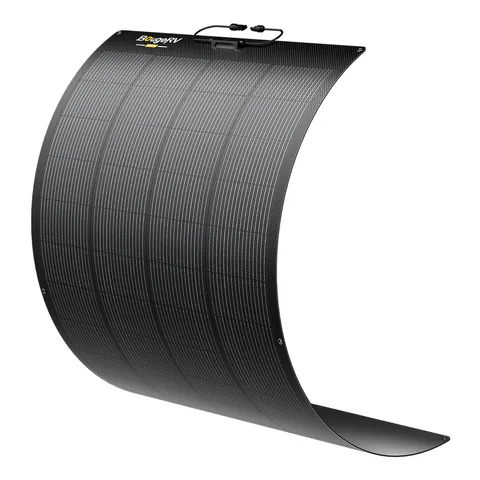 BougeRV Arch 2.0 200W flexible | 200 W | 53.0 x 30.9 in | 11.4 sq ft | 17.6 | $229.99 | $1.15 |
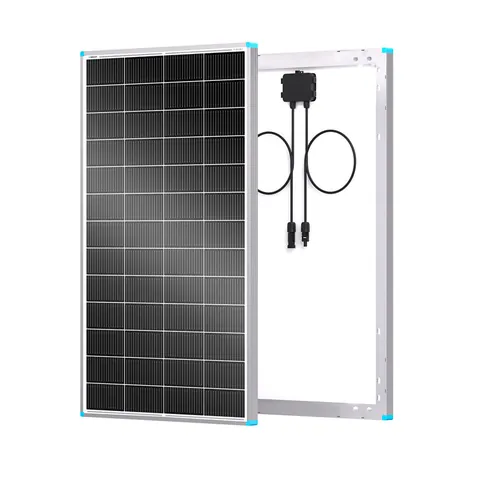 Renogy ShadowFlux 200W N-Type rigid | 200 W | 49.7 x 30.1 in | 10.4 sq ft | 19.3 | $239.99 | $1.20 |
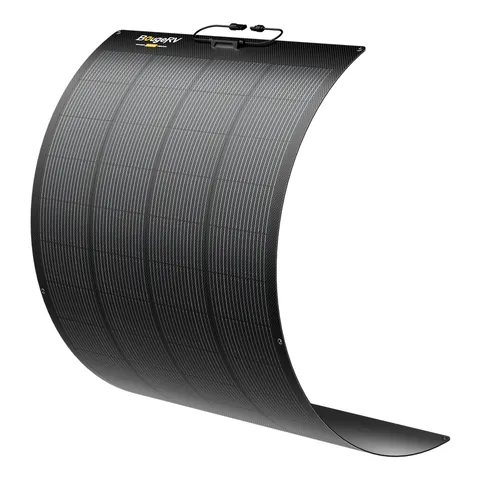 BougeRV Arch Pro 200W ShadePower flexible | 200 W | 53 x 31 in | 11.4 sq ft | 17.5 | $256.99 | $1.28 |
| Renogy Flex ShadowFlux 200W | 200 W | 62.2 x 27.4 in | 11.8 sq ft | 16.9 | $299.99 | $1.50 |
| Renogy 200W flexible | 200 W | 63.2 x 29.4 in | 12.9 sq ft | 15.5 | $311.99 | $1.56 |
| BougeRV 300W N-Type 16BB bifacial | 300 W | 61.3 x 37.4 in | 15.9 sq ft | 18.8 | $369.99 | $1.23 |
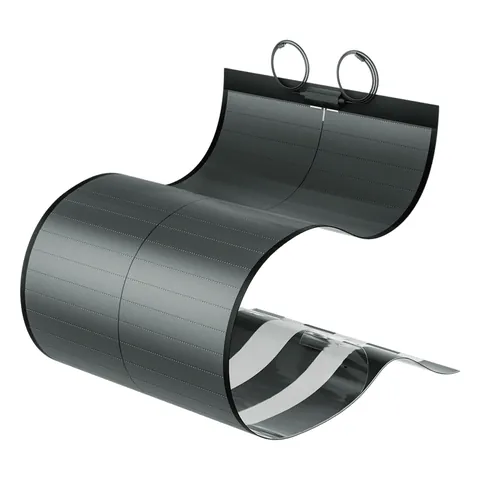 BougeRV Yuma 200W CIGS thin-film flexible | 200 W | 82.2 x 26.0 in | 14.8 sq ft | 13.5 | $439.99 | $2.20 |
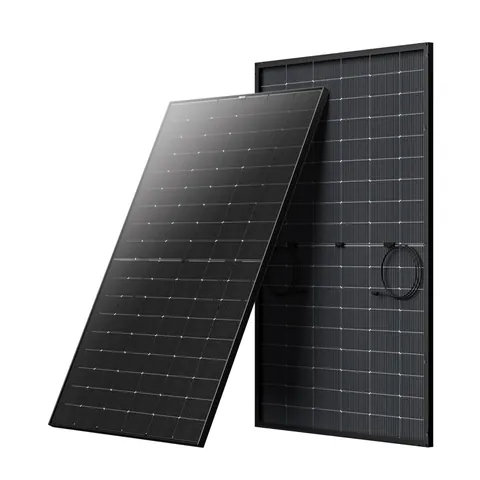 BougeRV 400W N-Type 16BB bifacial | 400 W | 67.8 x 44.6 in | 21.0 sq ft | 19.0 | $459.99 | $1.15 |
Size as published. Area and watts per square foot. Prices checked Nov 10.
What if the roof is not enough?
In a northern winter, few roofs can carry the watts the math asks for. The alternator is the usual second source: a DC-DC charger rated 30 A to 50 A puts back roughly 360 W to 600 W of charging while you drive, whatever the weather.
Roof and wiring. Have panels, roof penetrations and the controller installed by a qualified installer, follow the manuals, and size the controller for the array (see the roof tool).
Frequently asked questions
How many solar panels for a camper van?
Divide your daily watt-hours by the peak sun hours where you travel, then by the panel watts. With a 1,000 Wh day in Phoenix over the year (5.78 h), you need about 173 W before losses: one 200 W panel. In Olympia in December (0.88 h) the same day would need about 1,136 W, more than most van roofs hold.
How much solar for a 12V fridge?
Take the fridge's daily figure. EcoFlow publishes 165 Wh a day for its GLACIER Classic as a fridge: 165 / 5.78 = about 29 W of panel in Phoenix over the year, before losses. At the 60 W worst case (1,440 Wh), it is about 249 W.
Is 400 watts of solar enough for van life?
It makes about 400 x peak sun hours a day before losses: 2,312 Wh over the year in Phoenix, 1,348 Wh in Olympia, but 352 Wh in Olympia in December (NLR data). Enough depends on your loads and on the season.