We may earn a commission when you buy through our links. Learn more
In short: choose LiFePO4 lithium for a van you use often or live in: the makers publish a larger usable share, about a third of the weight of an AGM of the same Ah, and thousands of cycles. Its weak points are the higher price to buy and no charging below 32°F (0°C) unless the model heats itself. Choose AGM for occasional use, a tight budget up front, or cold-weather charging without a heated lithium battery; its weak points are half its rated capacity off limits, 63.9 lbs for Renogy's 100Ah, and 500 published cycles.
AGM (absorbent glass mat) is a sealed lead-acid battery. LiFePO4 (lithium iron phosphate) is the lithium chemistry used by every RV house battery in our price check. Both are sold as "12V 100Ah", and that is where the similarity stops. Here is what the makers publish, side by side.
How do lithium and AGM batteries compare?
| Published figure | Renogy AGM 12V 100Ah | Renogy Mini 12.8V 100Ah LiFePO4 | Battle Born 100Ah 12V LiFePO4 |
|---|---|---|---|
| Rated capacity | "100Ah (10 Hour Rate to 10.5V)" | "100Ah (0.5C, 25℃)" | "100Ah" |
| Usable share | "recommended not to discharge the battery below 50%" | - | "Usable Depth of Discharge | 100%" |
| Cycle life | "500 Cycles (50% DOD)" | "5000 Cycles (80% DOD, 80% EOL)" | "3,000-5,000" |
| Weight | "63.9 lbs / 29 kg" | "21.8 lbs / 9.9 kg" | "31 lb" |
“-”: the maker does not give this figure.
Read on renogy.com and battlebornbatteries.com; prices November 10, 2026.
Which costs less per usable kWh?
The price per rated kWh flatters AGM, because half of it is off limits. We divide the price by the usable energy instead: rated Wh x the published usable share, or x 80% when none is published (the depth Renogy uses for its lithium cycle-life figure).
| Battery | Rated energy | Usable energy | Price | Price per usable kWh |
|---|---|---|---|---|
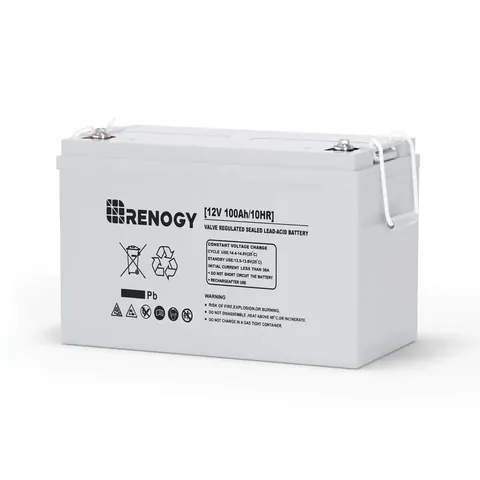 Renogy Deep Cycle AGM 12V 100Ah | 1,200 Wh | 600 Wh (50% usable, published) | $208.99 | $348.32 |
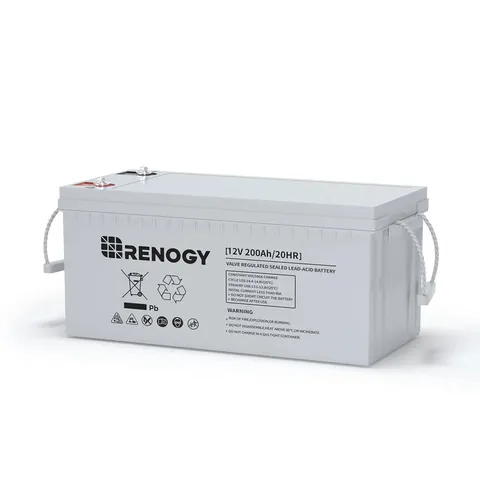 Renogy Deep Cycle AGM 12V 200Ah | 2,400 Wh | 1,200 Wh (50% usable, published) | $395.99 | $329.99 |
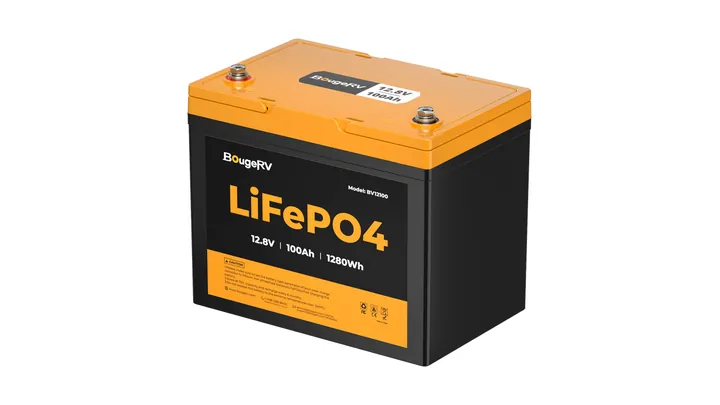
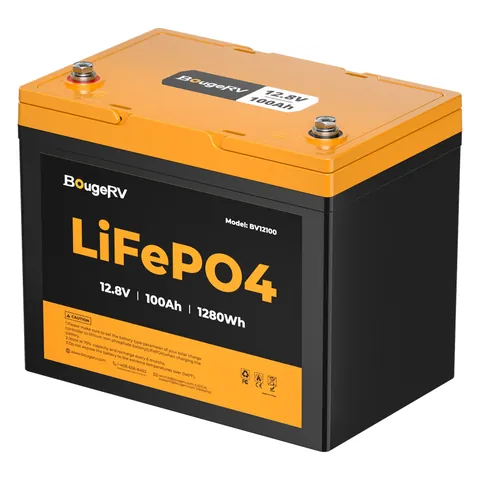 BougeRV 12V 100Ah Group 24 LiFePO4 | 1,280 Wh | 1,024 Wh (80% assumed, see below) | $269.99 | $263.66 |
| Renogy Mini 12.8V 100Ah LiFePO4 | 1,280 Wh | 1,024 Wh (80% assumed, see below) | $307.99 | $300.77 |
| Renogy Mini 12V 200Ah LiFePO4 | 2,560 Wh | 2,048 Wh (80% assumed, see below) | $653.99 | $319.33 |
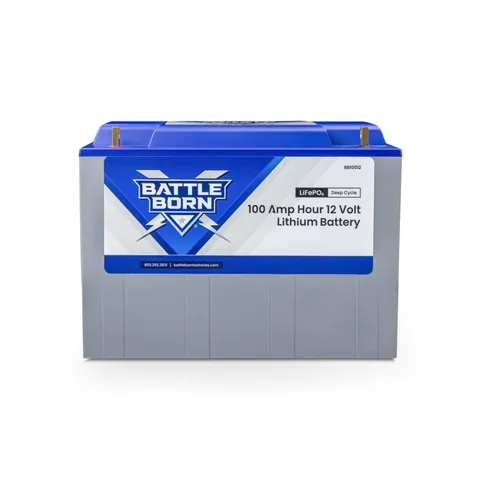 Battle Born 100Ah 12V LiFePO4 | 1,200 Wh | 1,200 Wh (100% usable, published) | $799 | $665.83 |
What does it mean for a van?
- Weight is payload. Two AGM batteries of 100Ah weigh 127.8 lbs for about 1,200 usable Wh; one Renogy 200Ah Mini LiFePO4 rated 2,560 Wh holds about 2,048 usable Wh at 80%.
- Cycles add up. 500 cycles is under a year and a half of daily use; the LiFePO4 figures run to thousands, under their own test conditions.
- AGM still has a place for occasional use, when the budget is tight up front, or in a cold climate where you cannot add a heated lithium battery.
Every battery we read, with prices: RV lithium battery comparison. Your own size: power budget.
Changing chemistry is a system change. Going from AGM to lithium changes charge voltages, and often the cables and fuses that a higher current needs. Have the swap done or checked by a qualified installer, following the battery and charger manuals and, for RVs, NFPA 1192.
Frequently asked questions
Is lithium worth it over AGM in an RV?
On the figures we read, an AGM is cheaper to buy but gives half its rated capacity as usable energy (Renogy: do not discharge below 50%), weighs about three times more for the same Ah (63.9 lbs against 21.8 lbs for Renogy's 100Ah AGM and Mini LiFePO4), and is rated for 500 cycles at 50% depth against 5,000 at 80% for Renogy's LiFePO4. Per usable kWh, the gap shrinks or reverses; see the table.
Can I charge lithium with my AGM charger?
Not always. LiFePO4 pages publish their own charge voltages (BougeRV 14.4 to 14.6 V, Battle Born 14.2 to 14.6 V). Check that your converter, solar controller and DC-DC charger have a lithium profile; the battery manual has the settings.
Can lithium batteries be charged in the cold?
The BougeRV and Renogy pages we read list a charge range starting at 32°F (0°C). Below that you need a battery with self-heating or low-temperature protection, which several makers sell as separate models.